Contemporary architecture integrated into the landscape

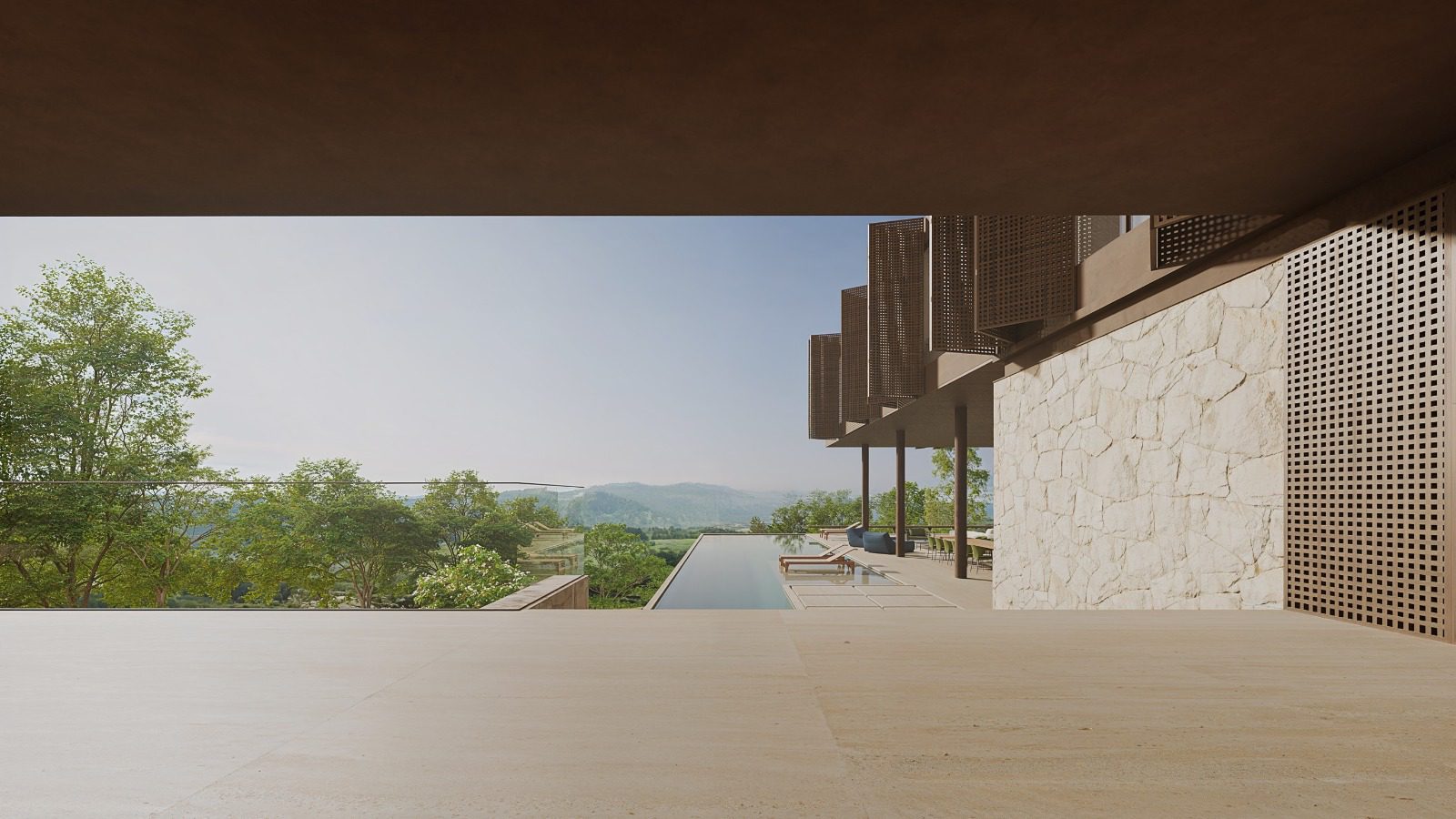
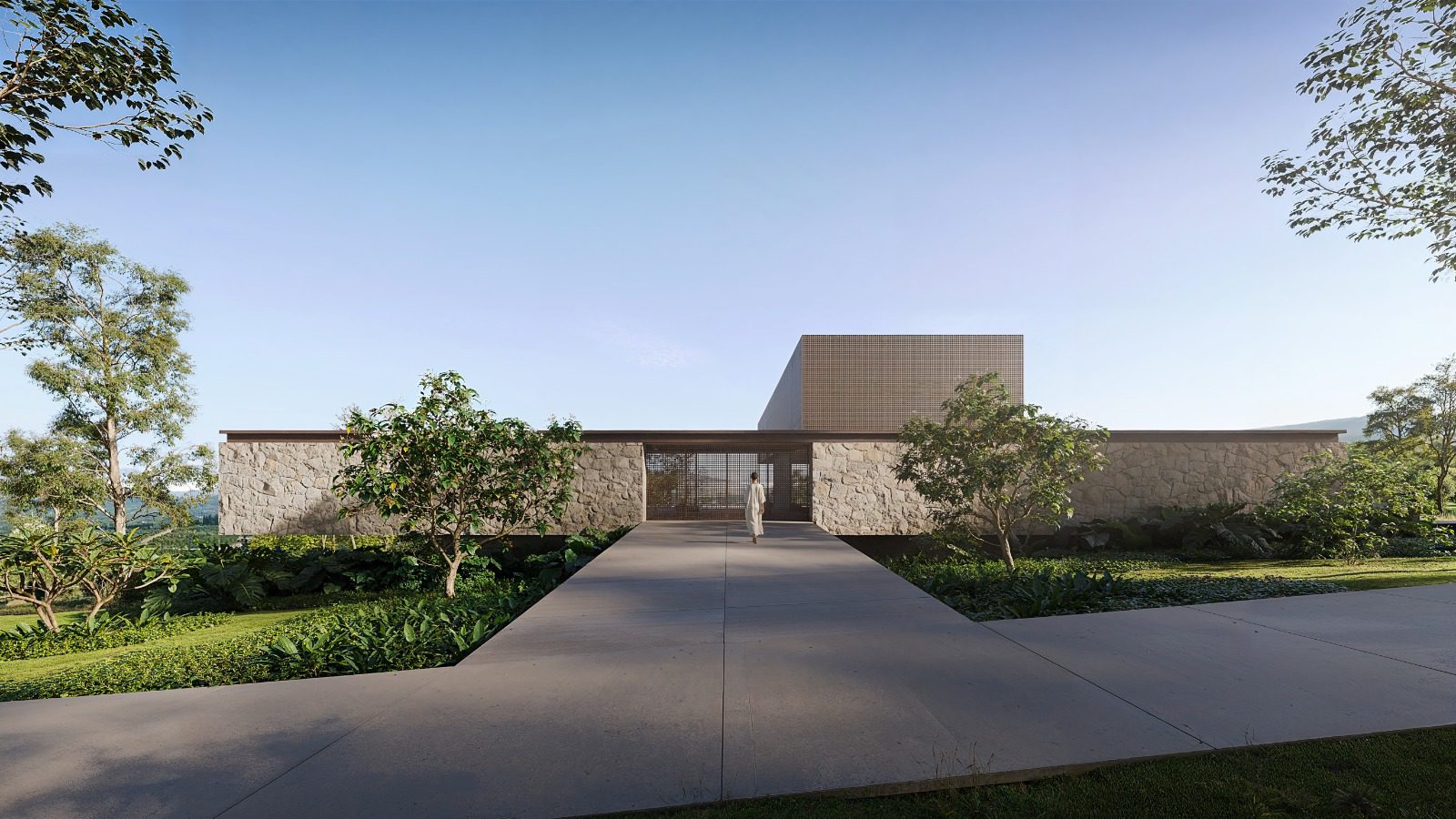
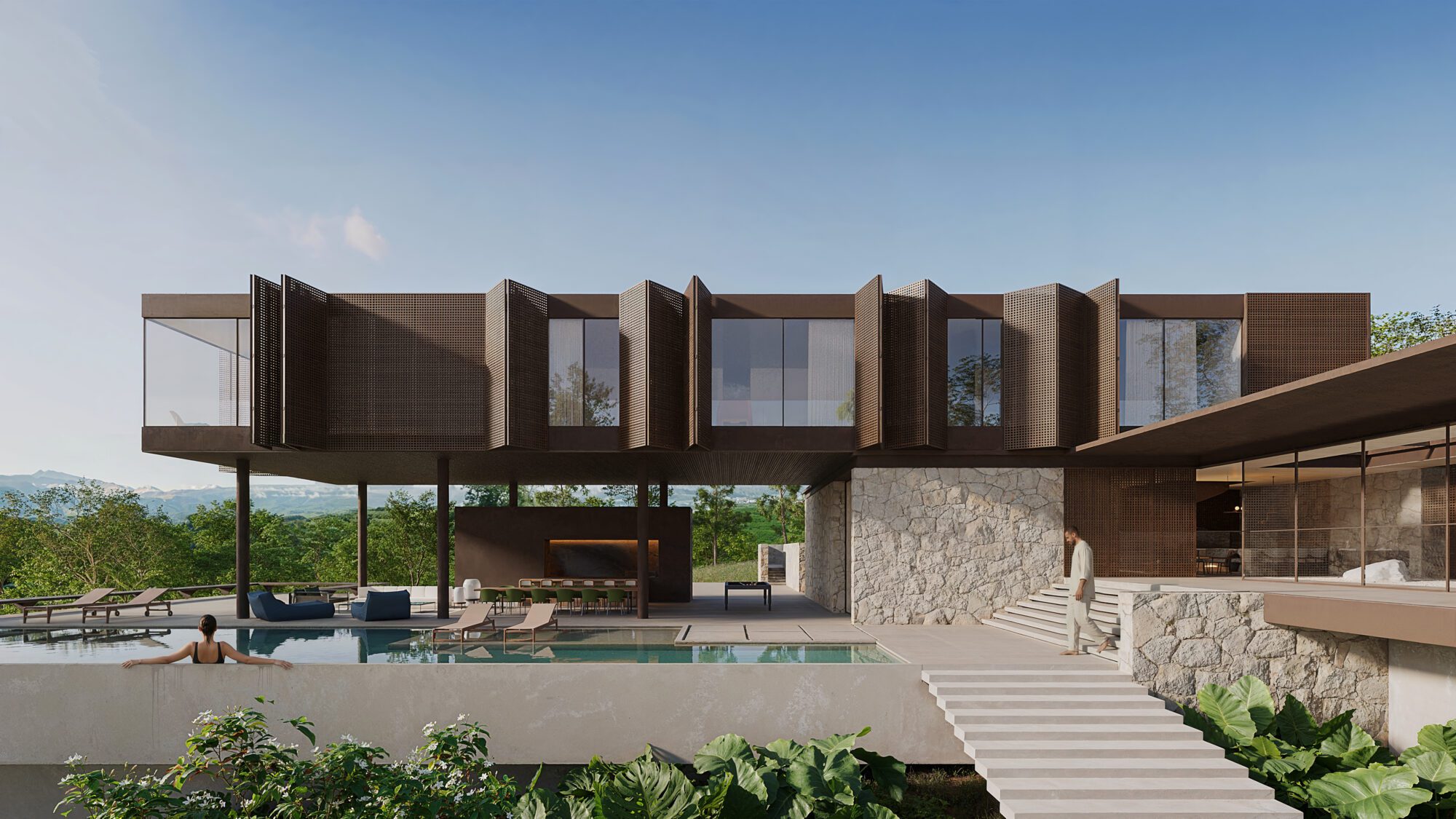
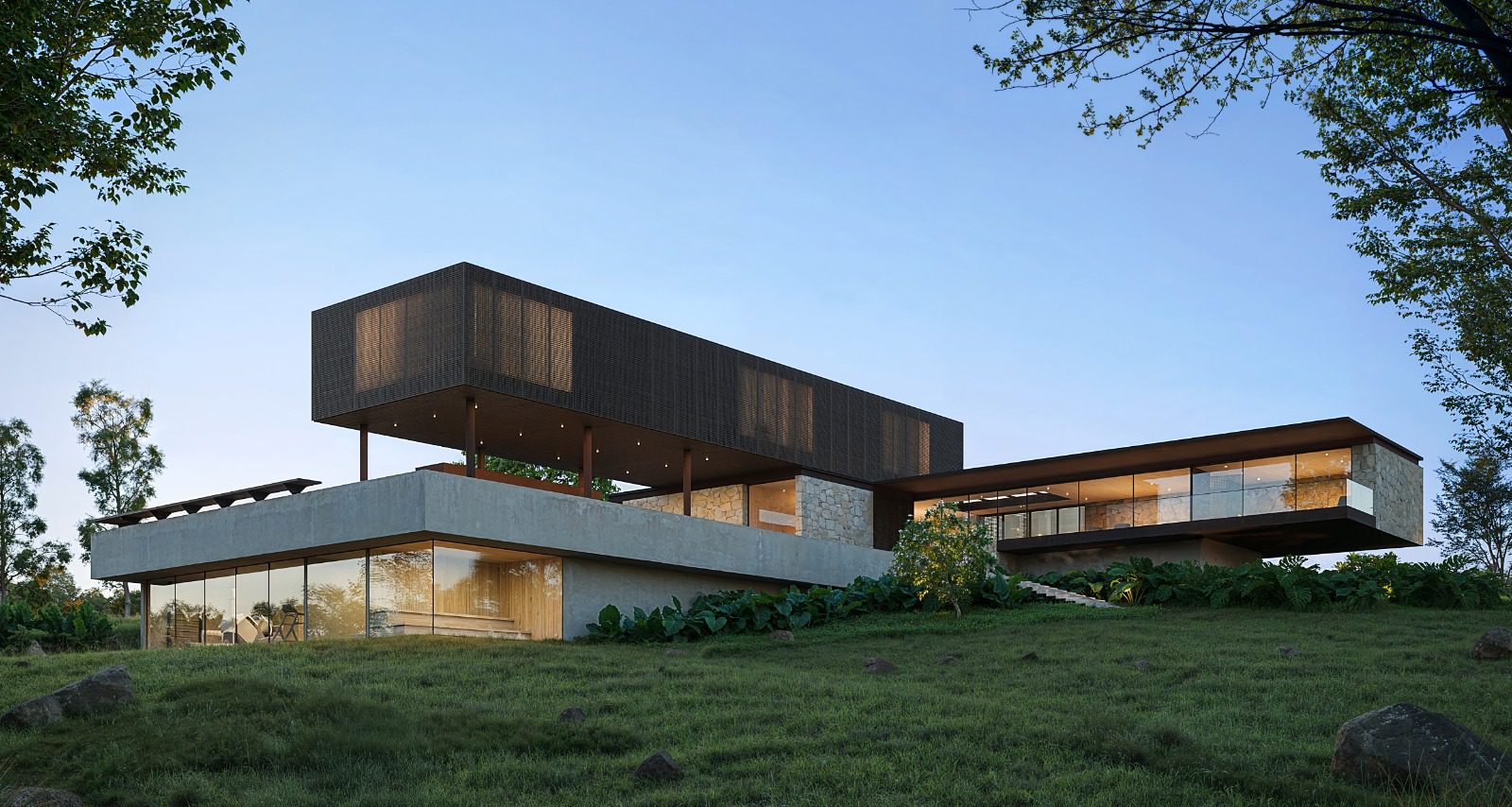
Casa Horizonte is born from the desire for an architecture that stretches across the land, following the natural movement of the earth until it blends into the landscape. More than occupying, it rests upon the ground. Its placement respects the rhythm of the terrain and translates, through continuous lines and planes, the gesture of contemplating the horizon.

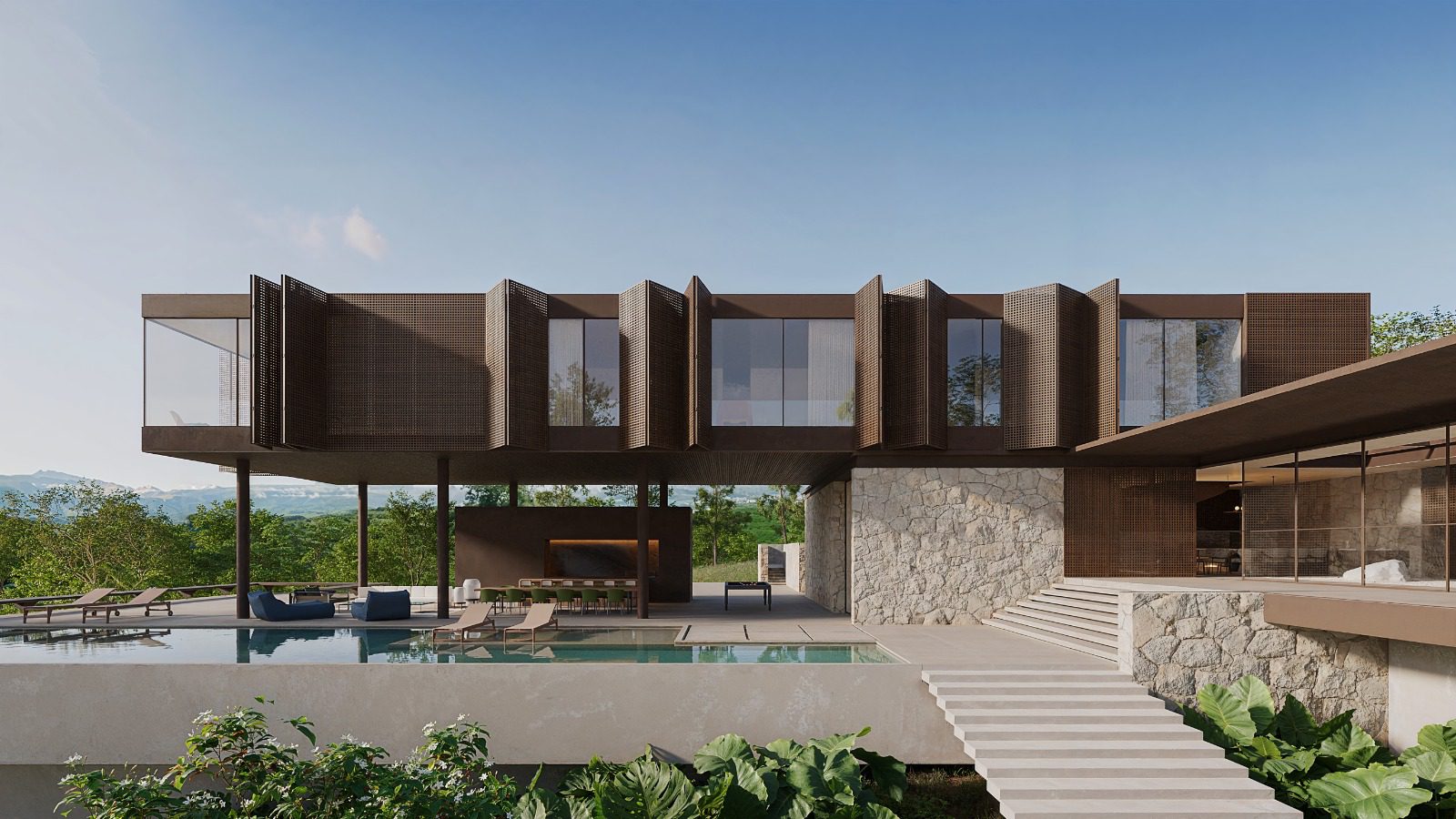
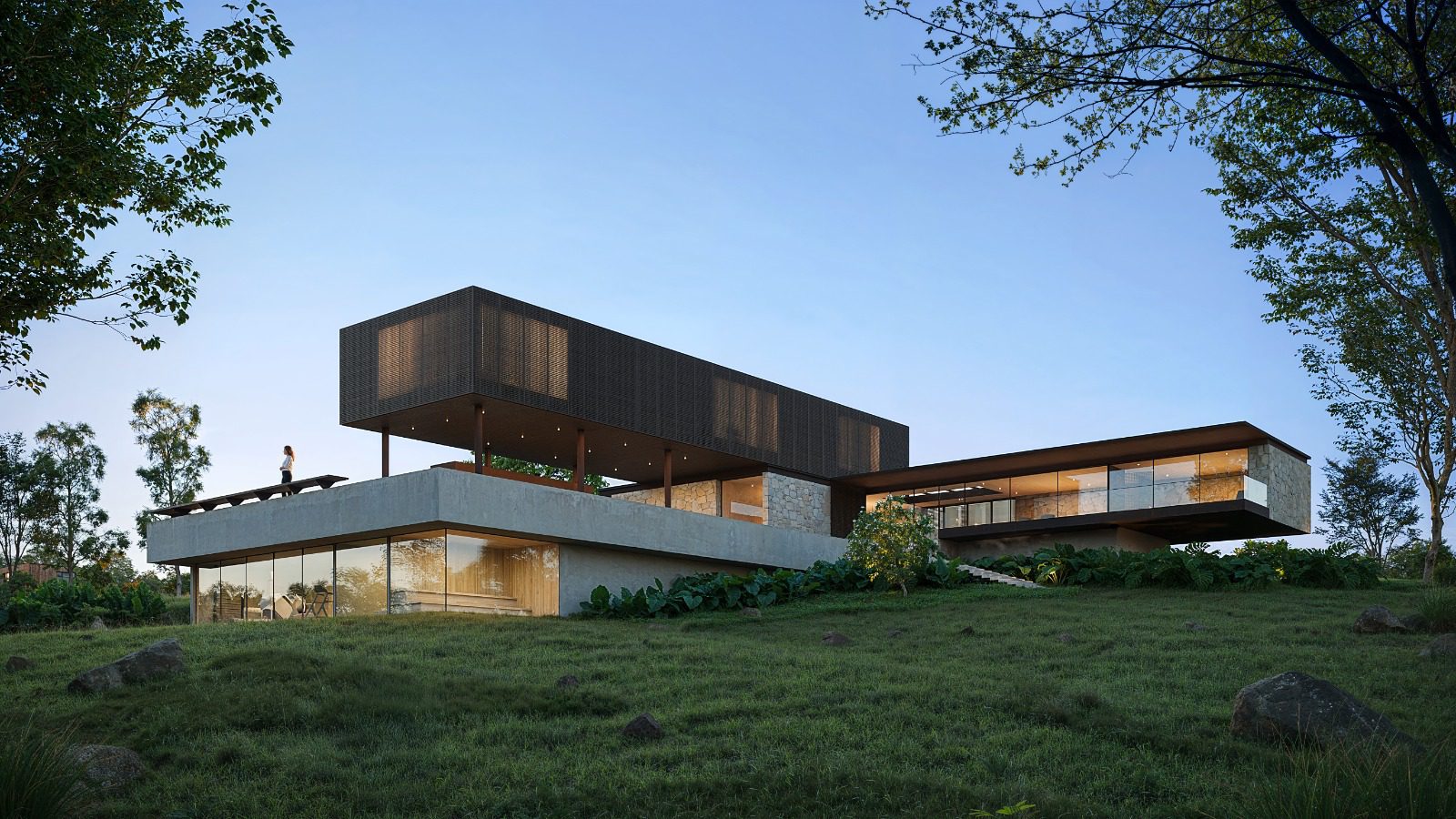
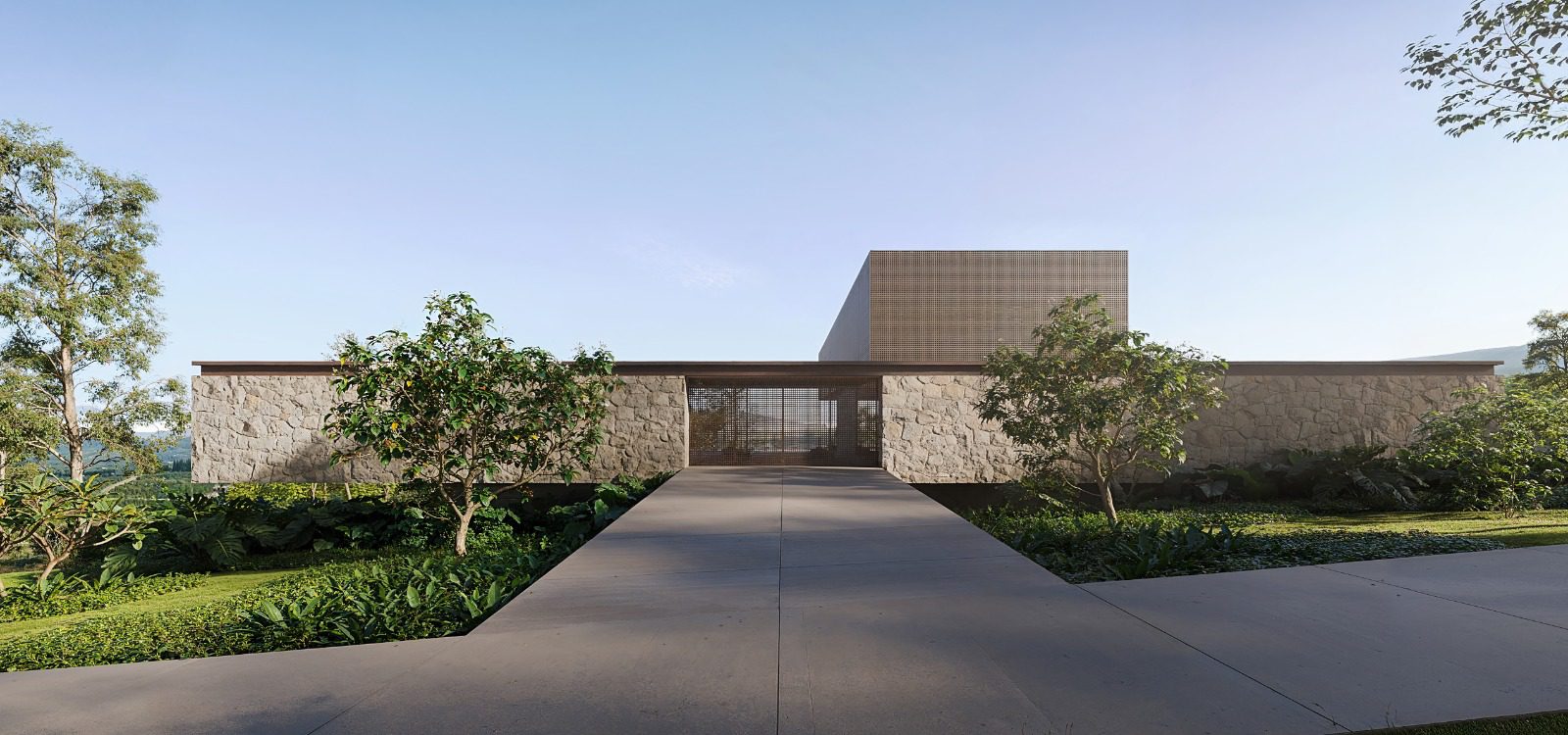
Between solids and voids, the structure unfolds in horizontal planes that connect with lightness. The house reveals itself in distinct ways depending on the point of view: from the main façade, it appears contained and quiet; from other angles, it exposes the complexity of its levels and the fluidity of its spaces. Pale stone walls contrast with metallic volumes, forming a sequence of layers that filter, protect, and unveil.
How the metal mesh shapes light and privacy

On the upper floor, a metallic lattice wraps the private spaces, evoking a skin that breathes and connects the interior to the exterior, like a living organism — an architecture that modulates light and transparency throughout the day. As an extension of this concept, time slows down inside. Travertine marble, light wood, and mineral tones make up a serene palette that reflects light and invites the landscape to become part of the home’s daily life.

The central courtyard as the heart of the house

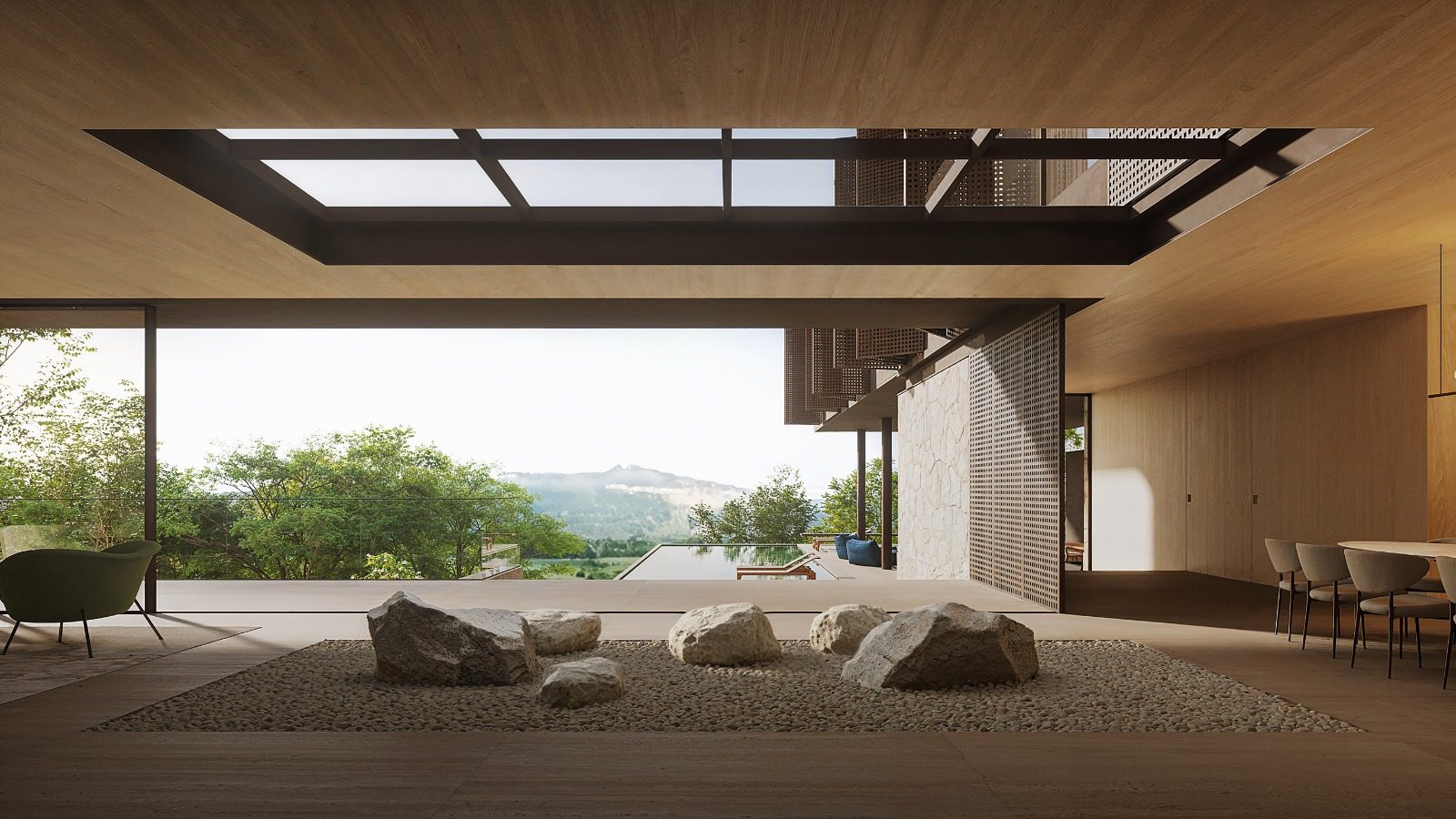
At the center, a skylight-lit courtyard hosts a cluster of natural stones, bringing the materiality of the outside world into the heart of the residence and creating a connective axis between the living areas. Through this space, one reaches the pool, conceived as a natural extension of the house — a place where coexistence and contemplation meet. Sun orientation and open planes were carefully studied so that light is distributed evenly throughout the year, in every season.

Casa Horizonte is an exploration of the threshold between seeing and inhabiting. A work that transforms as it is observed, where the horizon ceases to be merely landscape and becomes part of the architecture itself — a house that watches, breathes, and moves with time.