
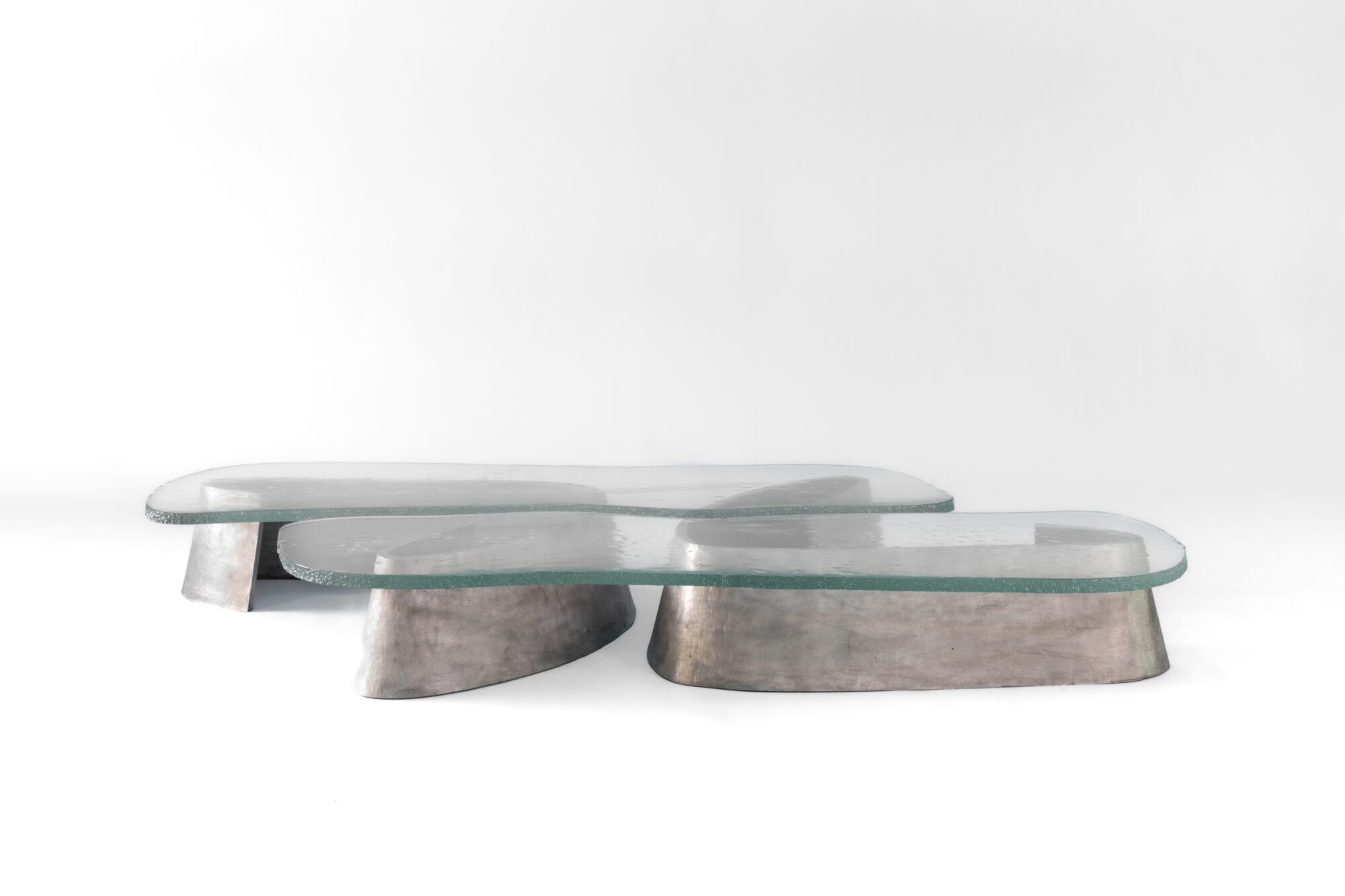
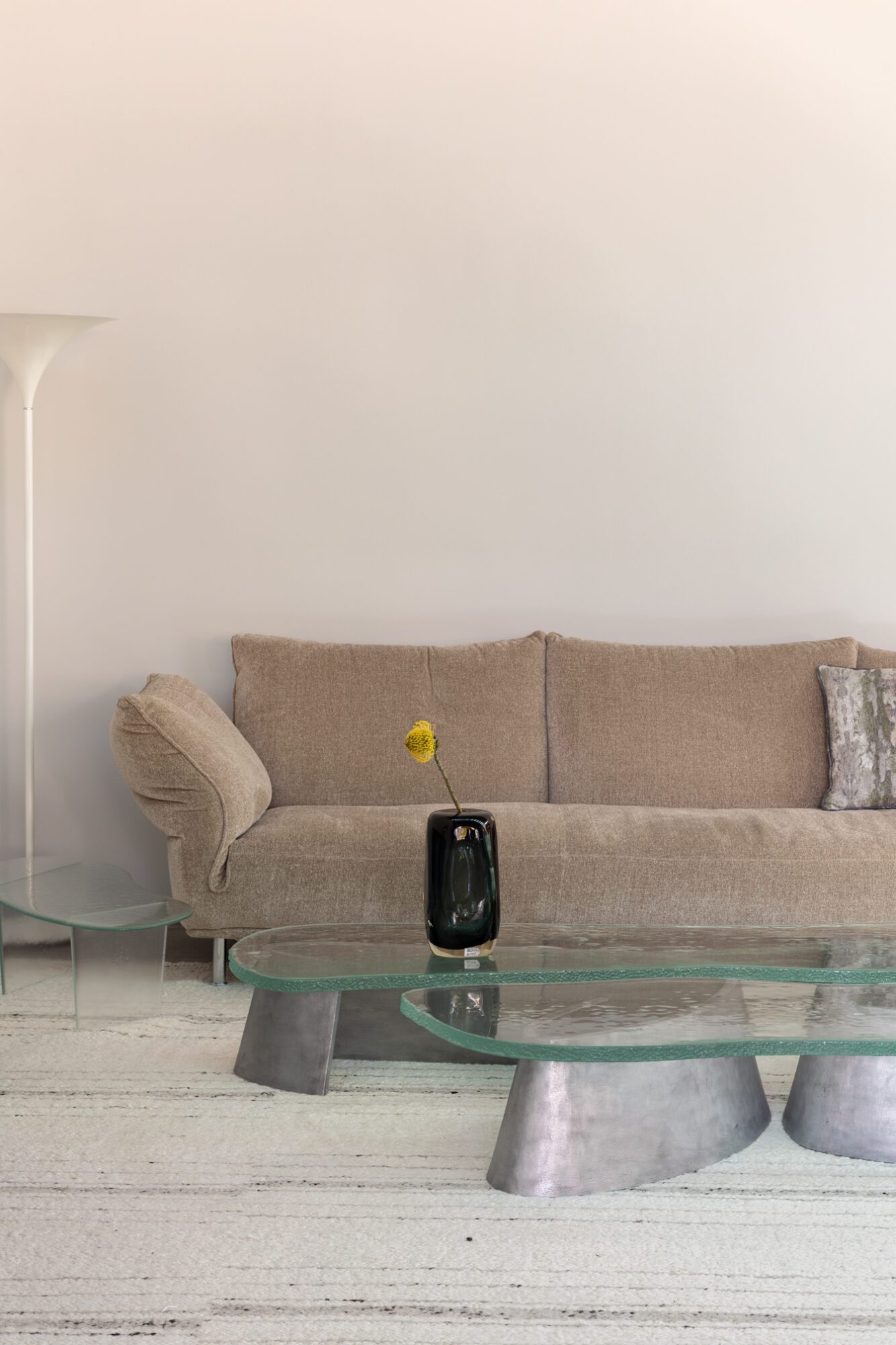
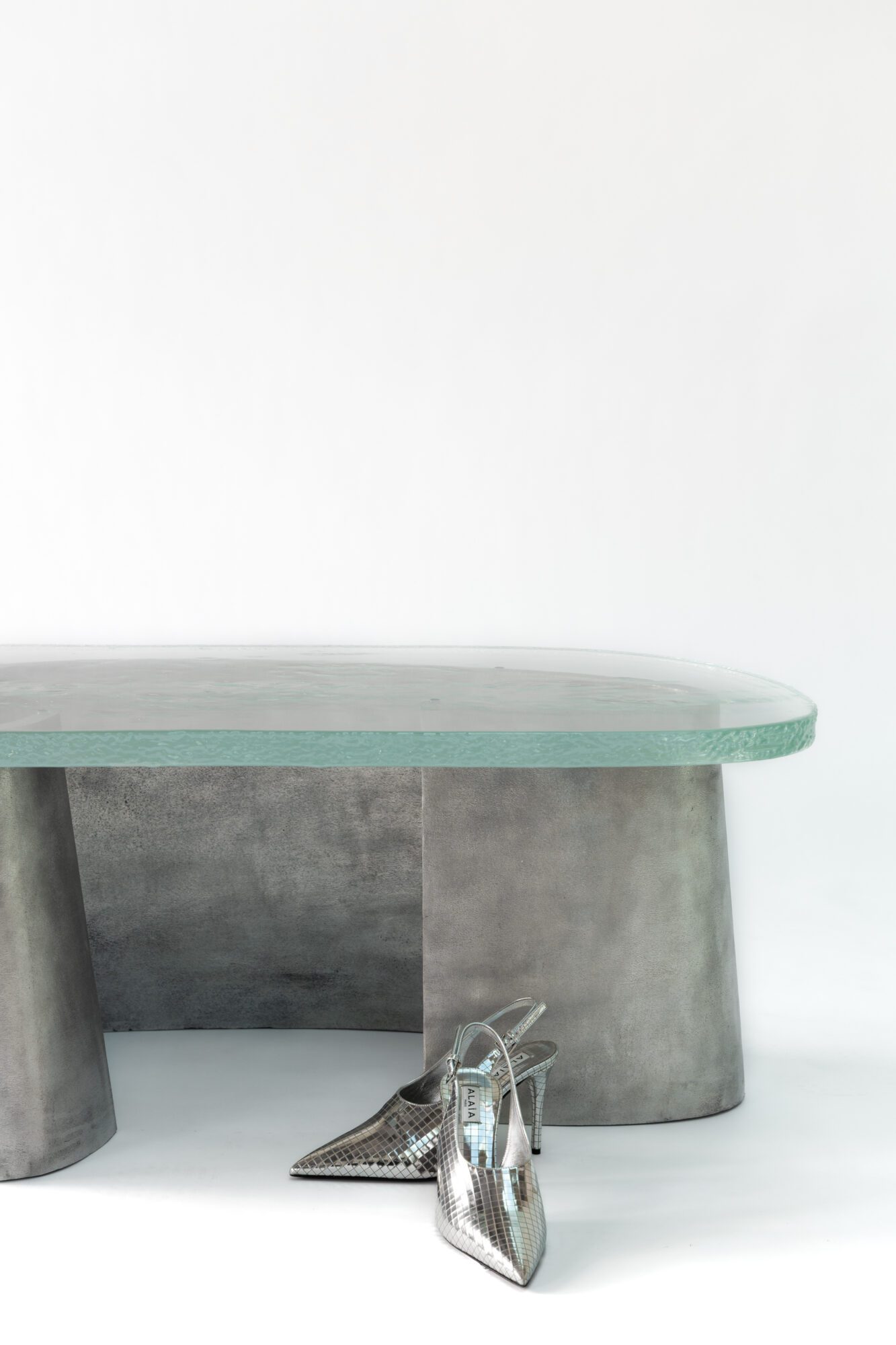
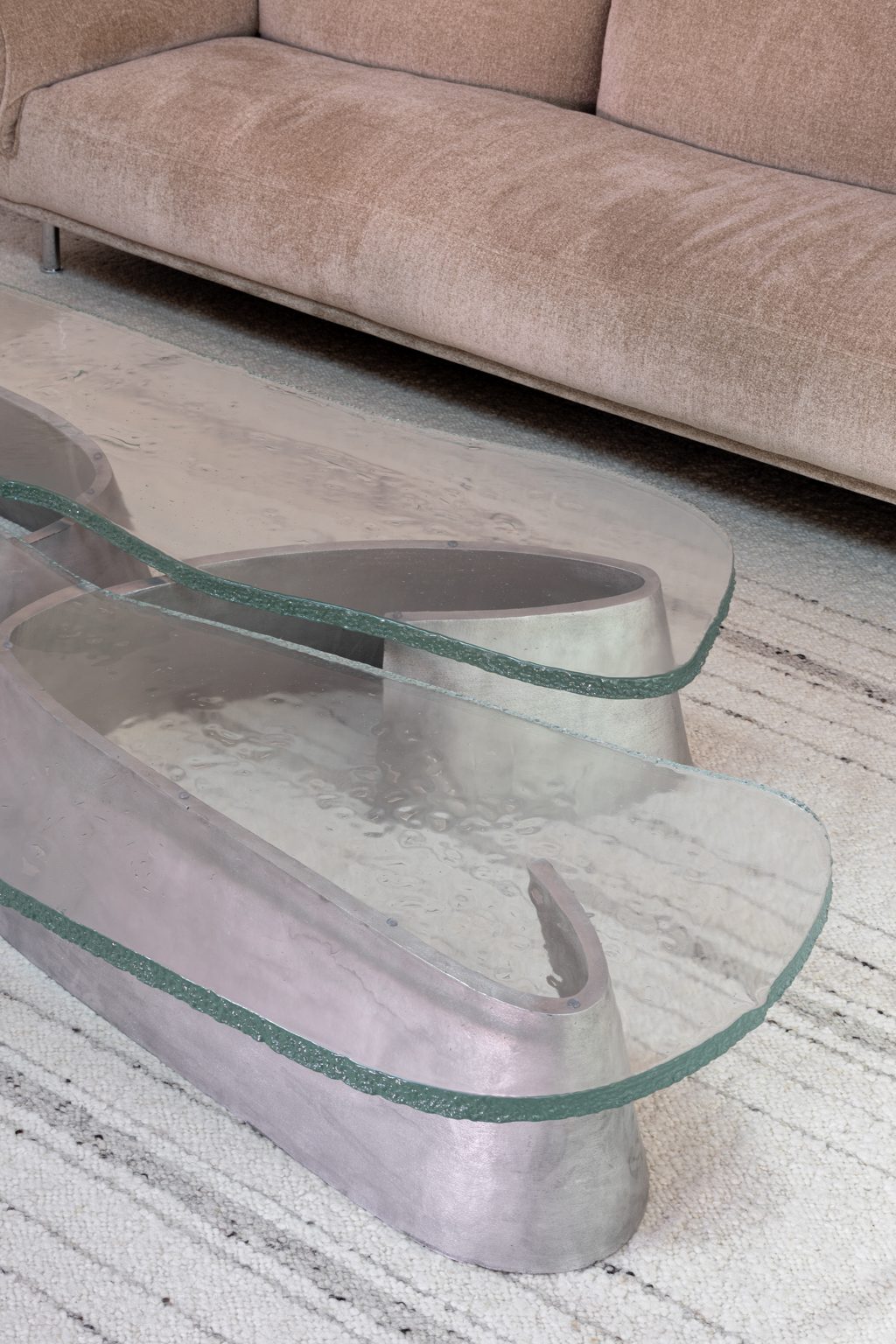
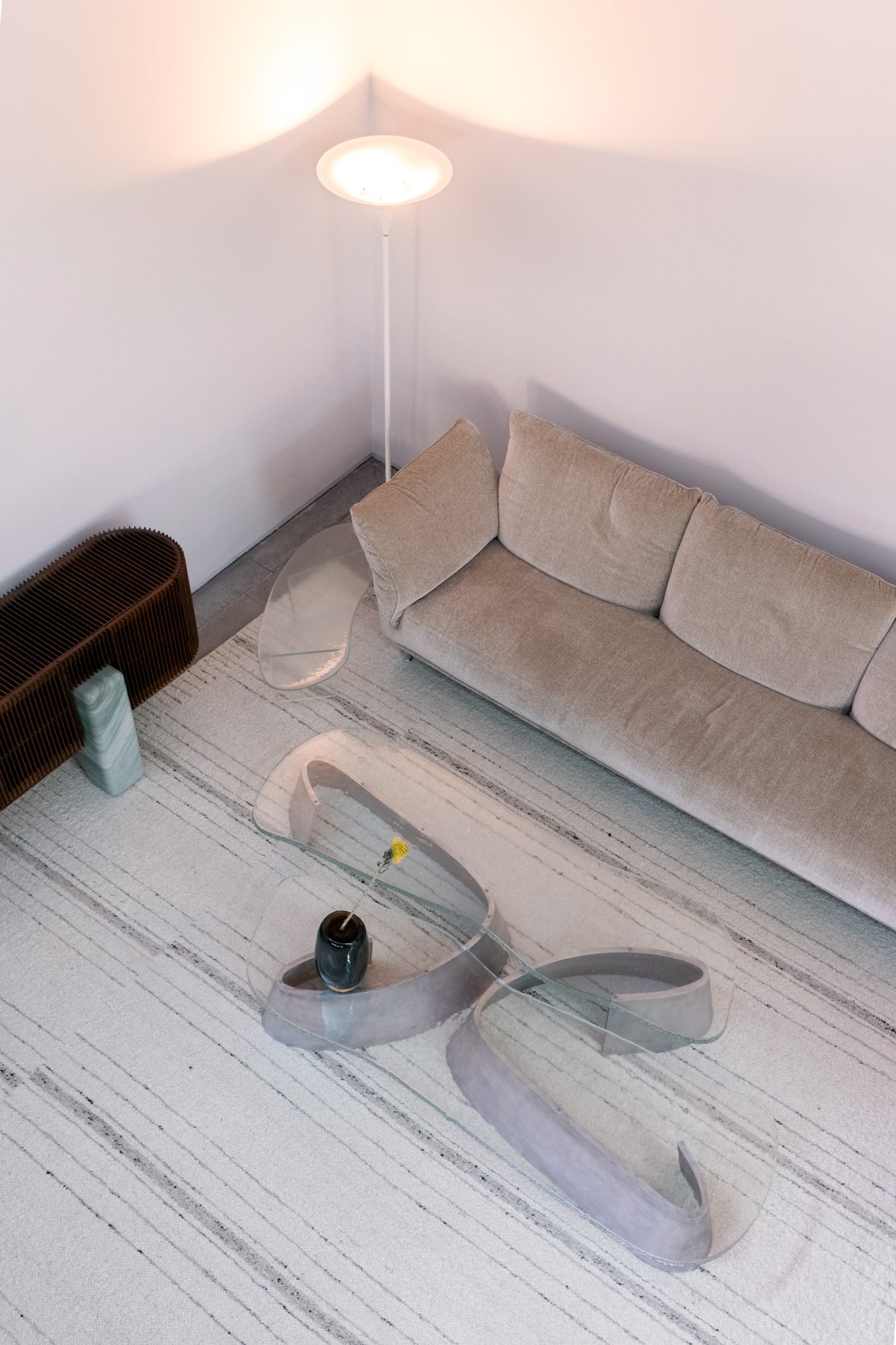
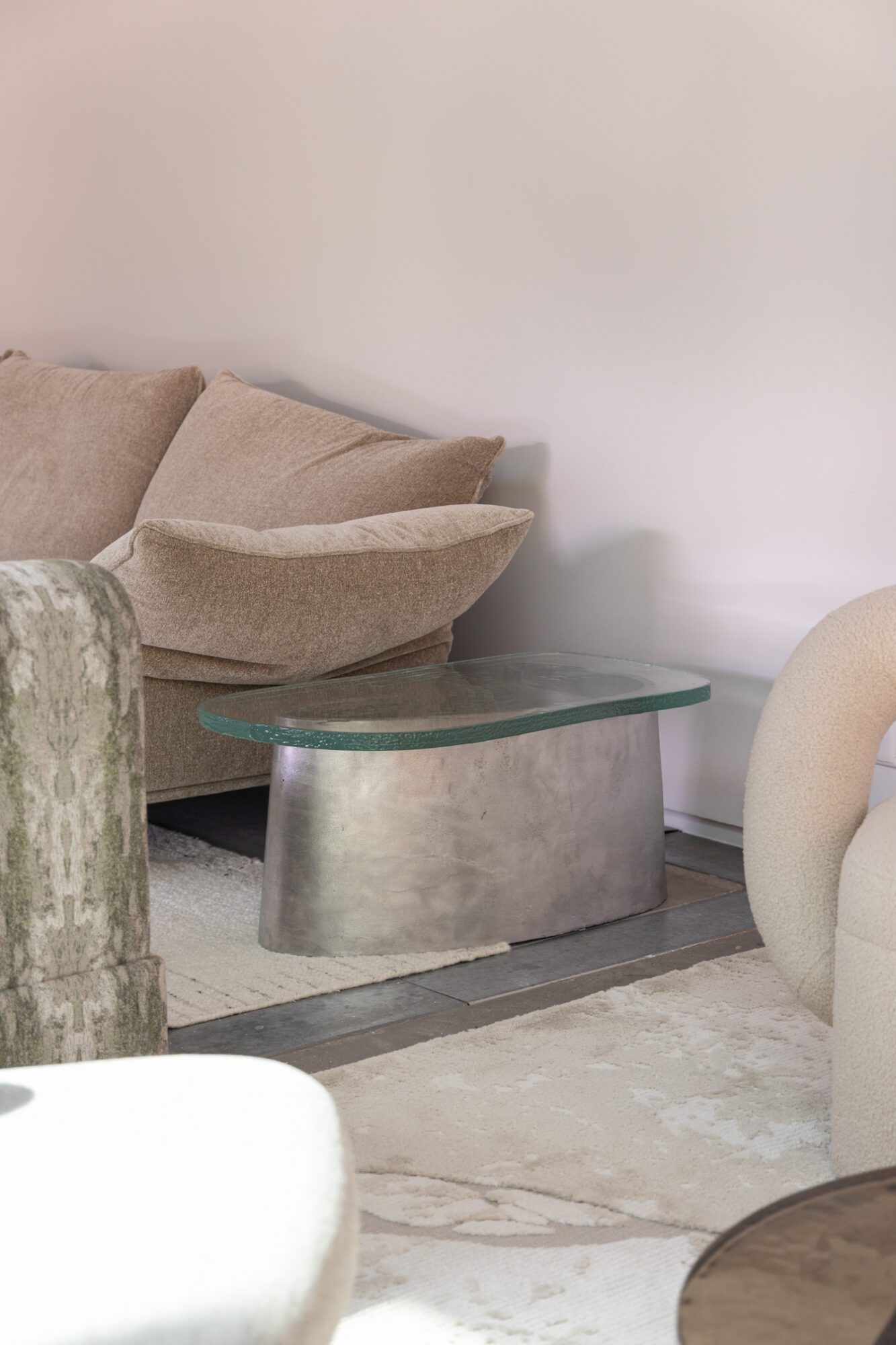
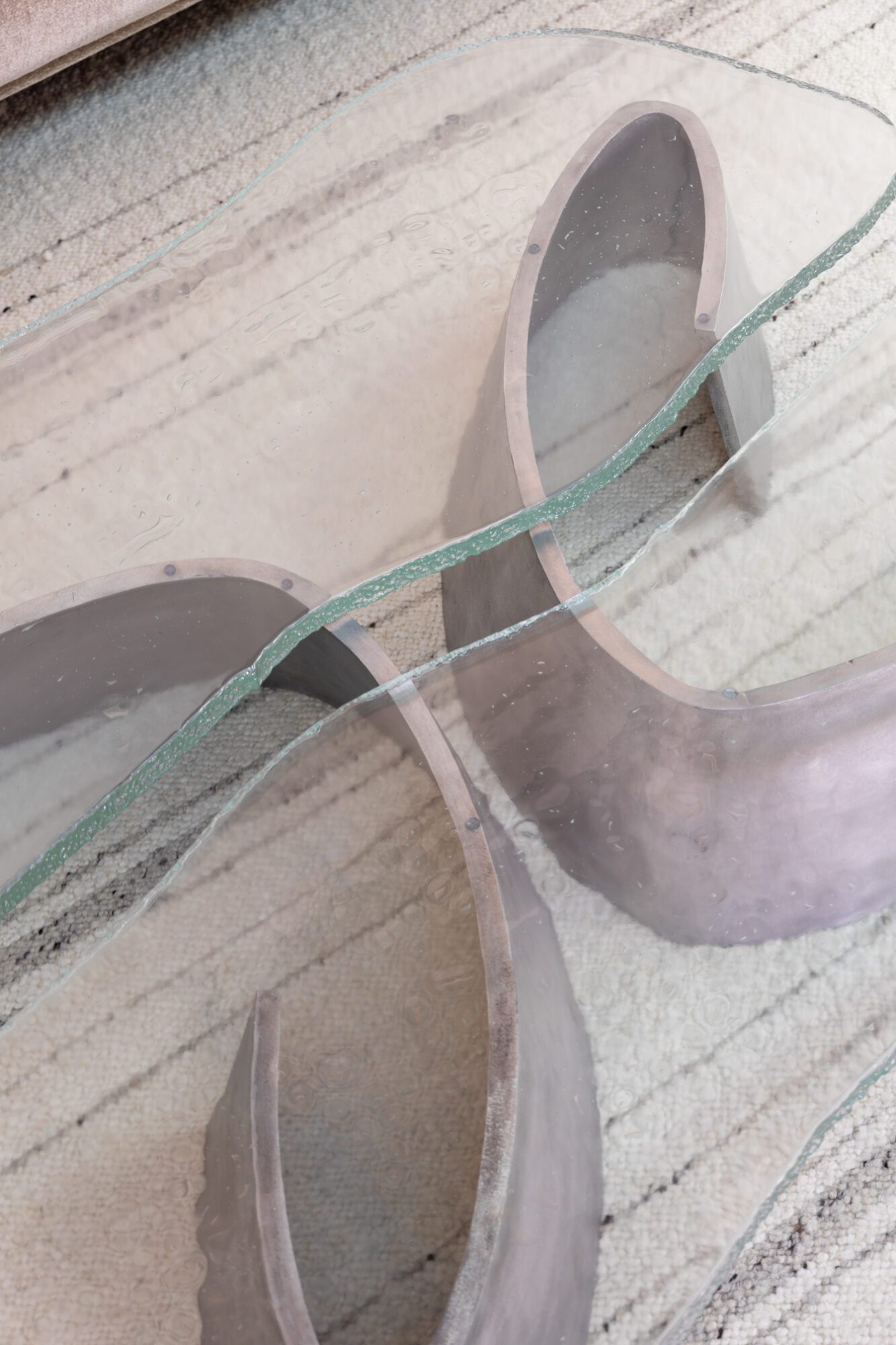
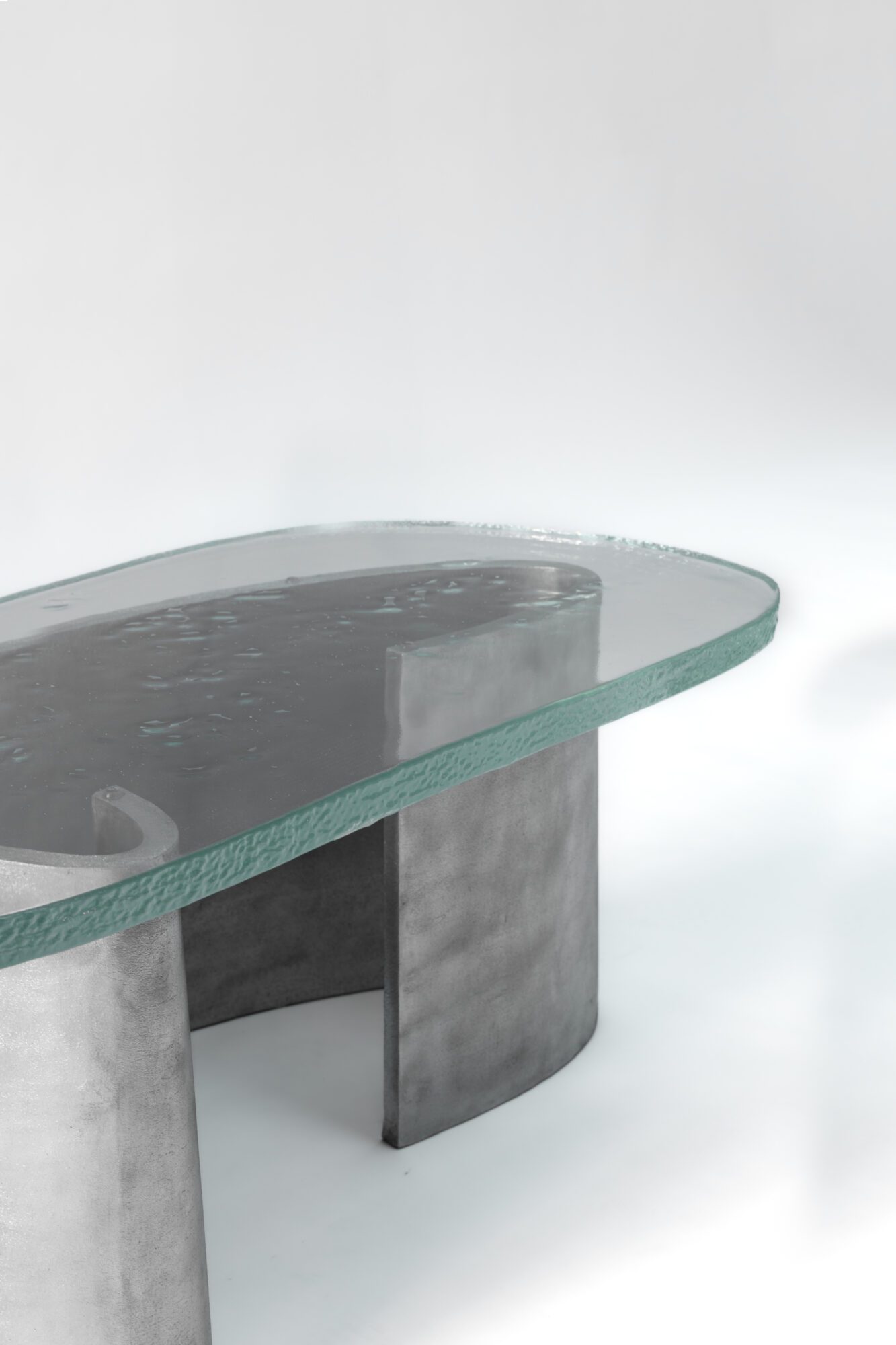
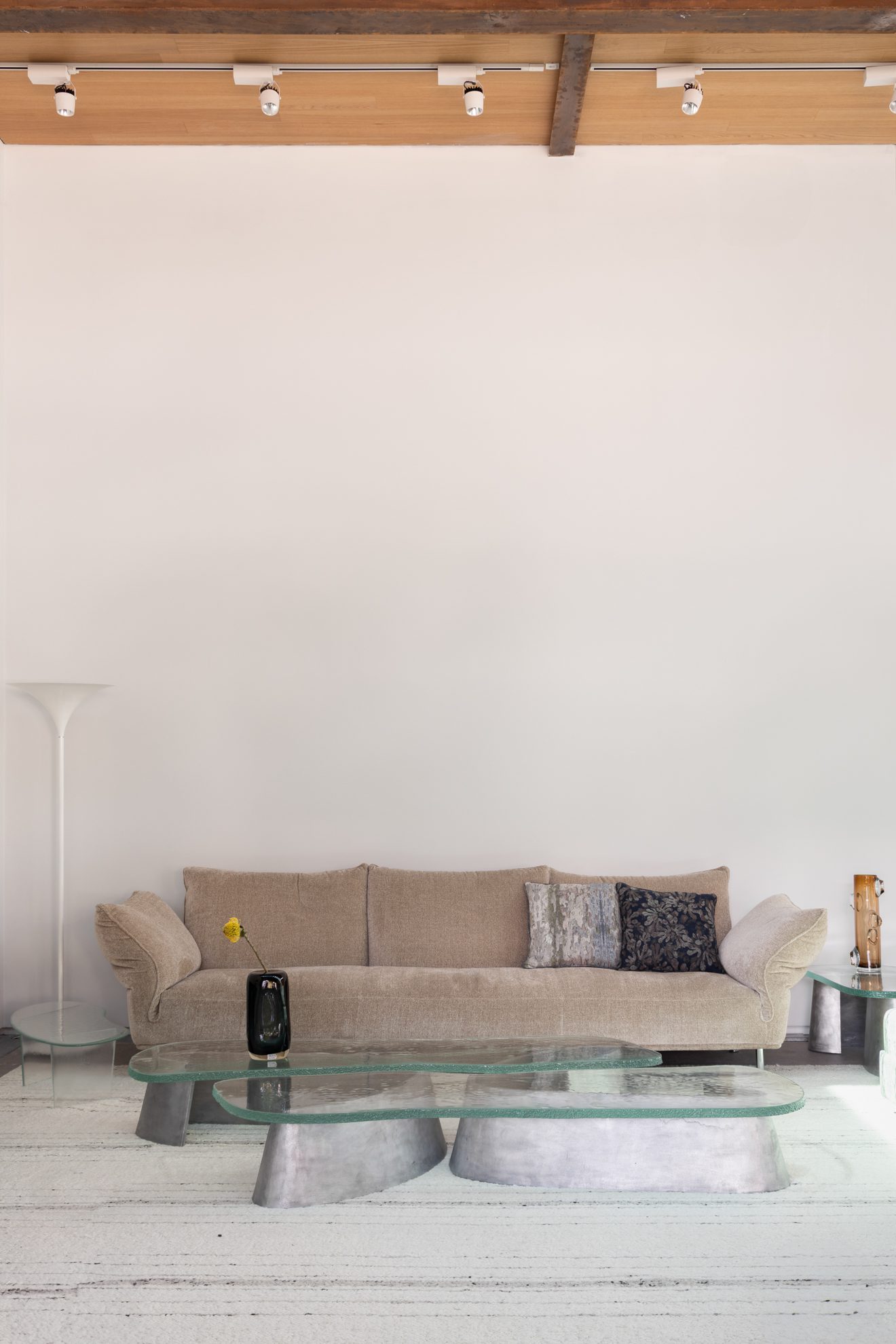
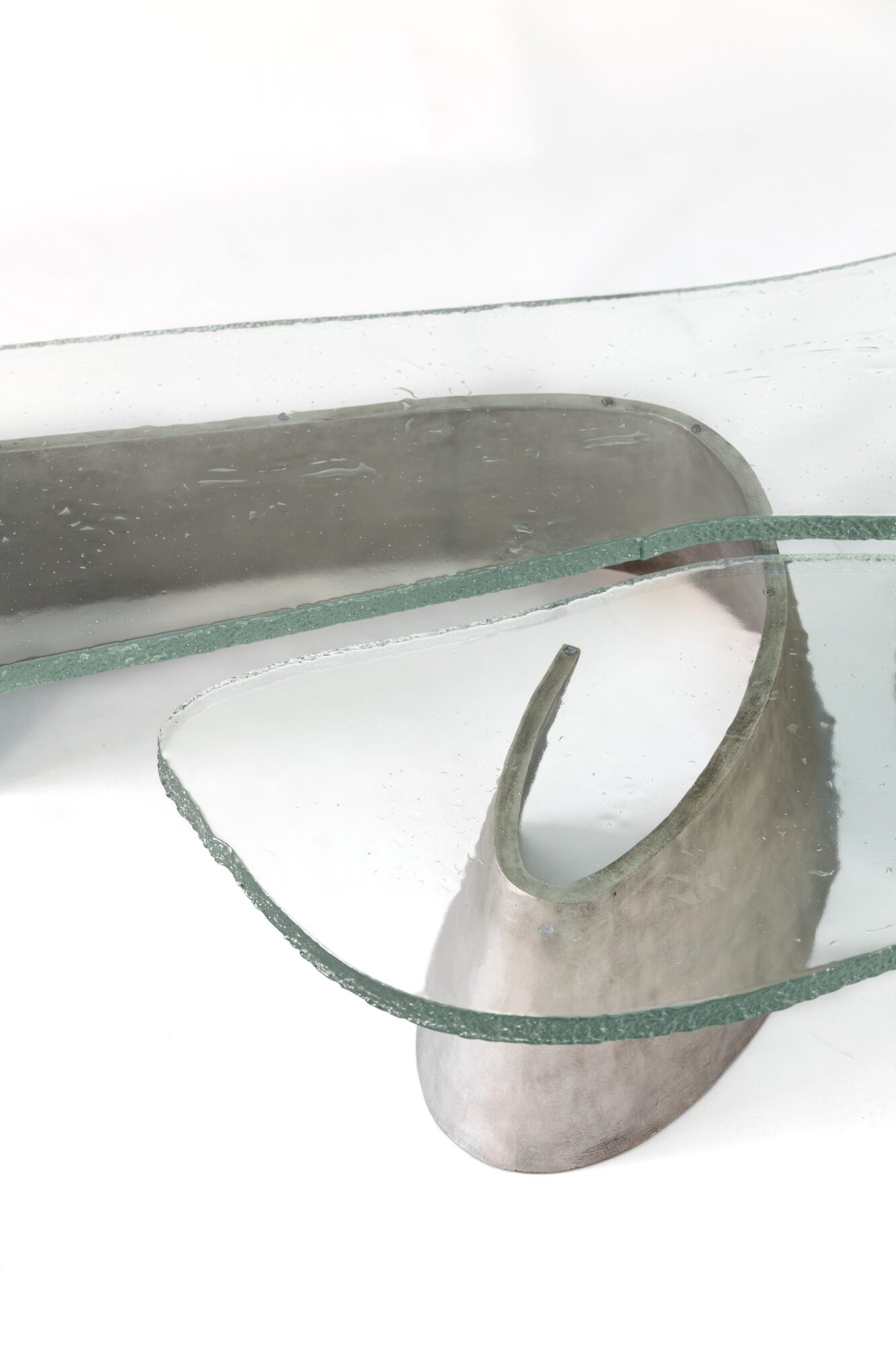
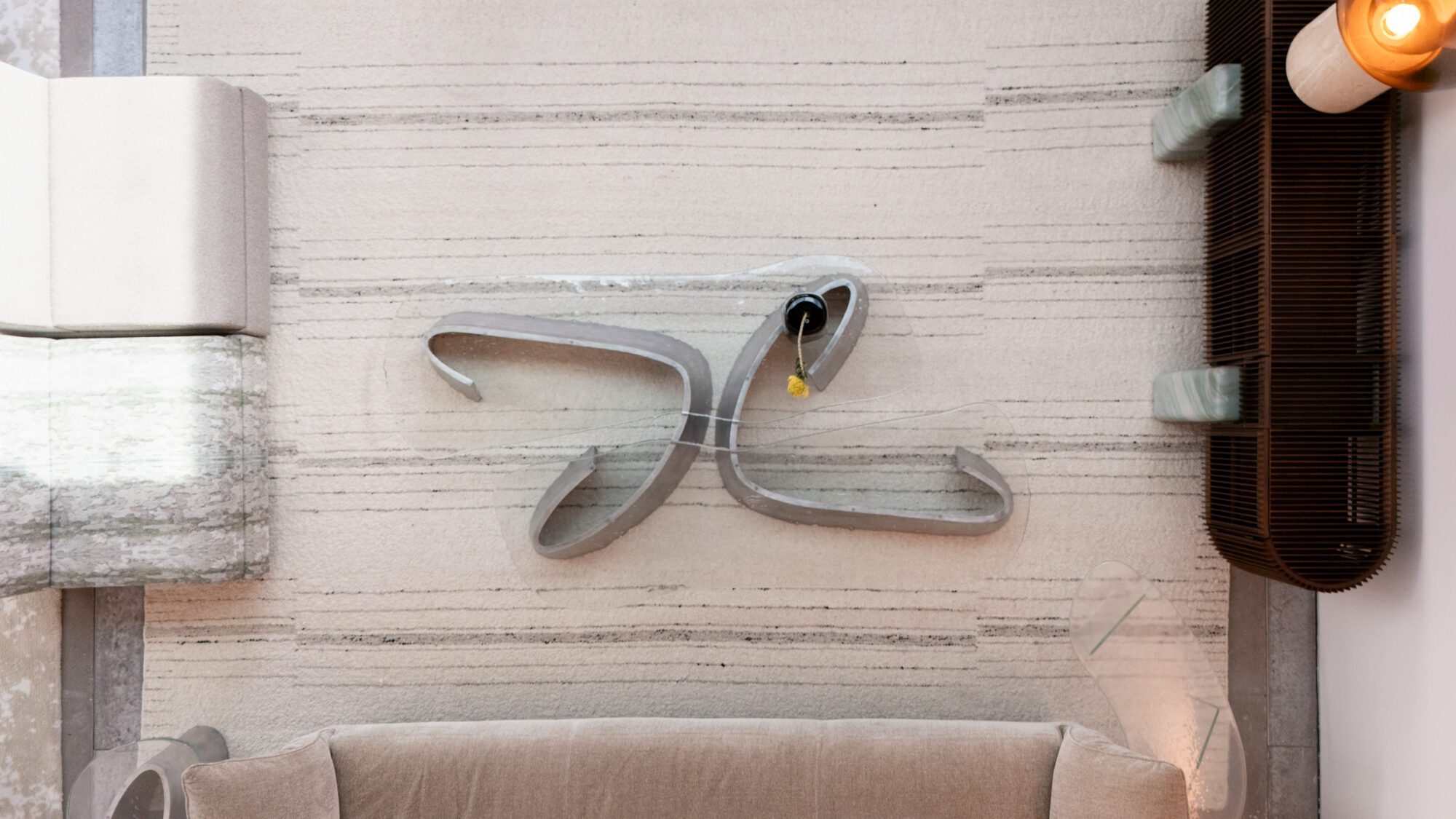
The Wedge Table combines minimalist design, fluid lines and materials such as matte aluminum and glass to create a piece that is lightweight, structured, and sculptural.
Wedge is the latest release from InterSections: a collection created by architect and designer Fernanda Marques, in partnership with Firma Casa. Marked by a restrained elegance, it is a piece that invites a closer, more contemplative look. Though in terms of design Wedge is concise — almost elemental — its carefully curated selection of materials reveals a refined complexity, balancing weight and transparency to ensure that the table never feels overly heavy nor fragile, while also producing bold visual
effects.
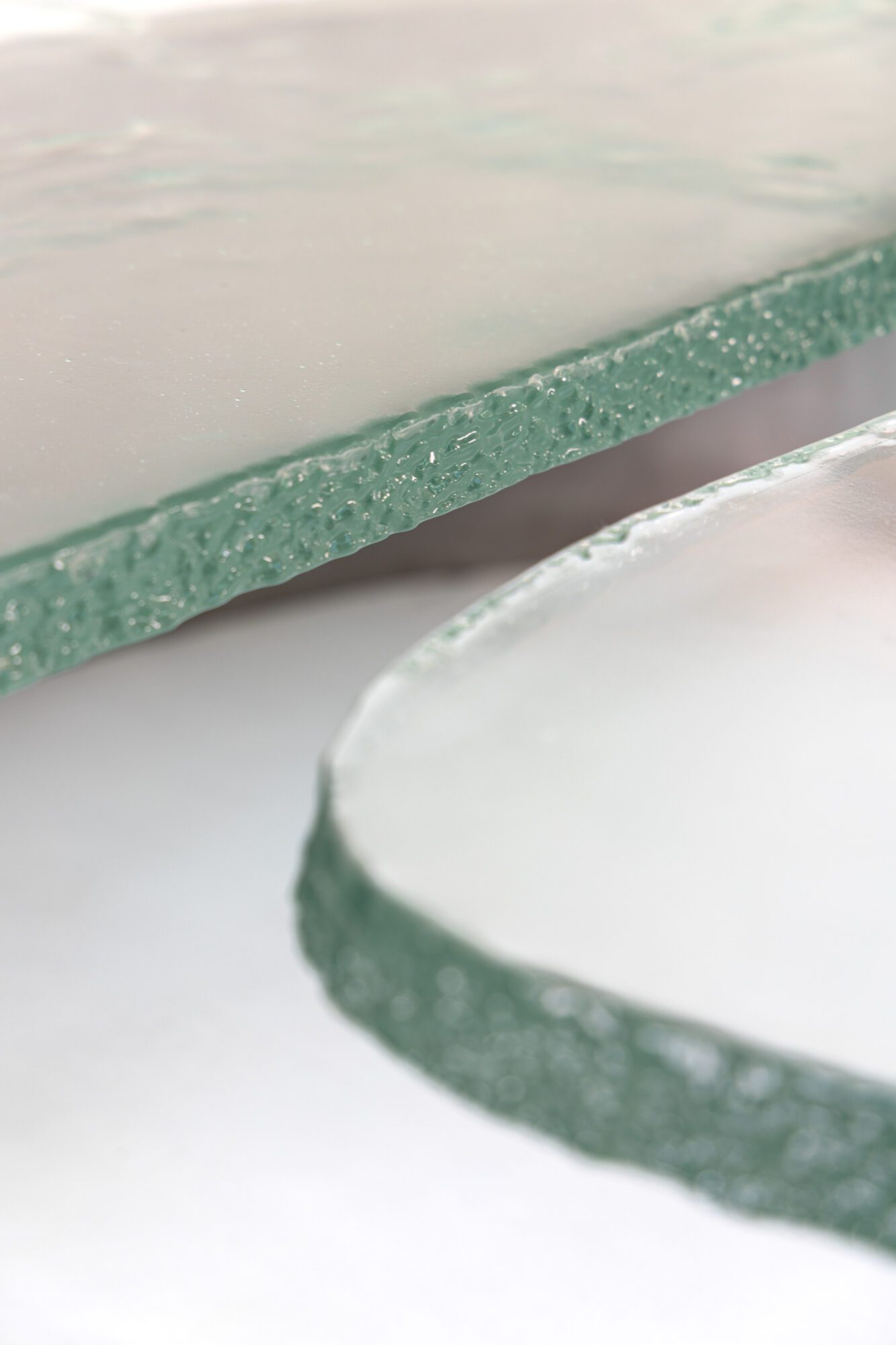
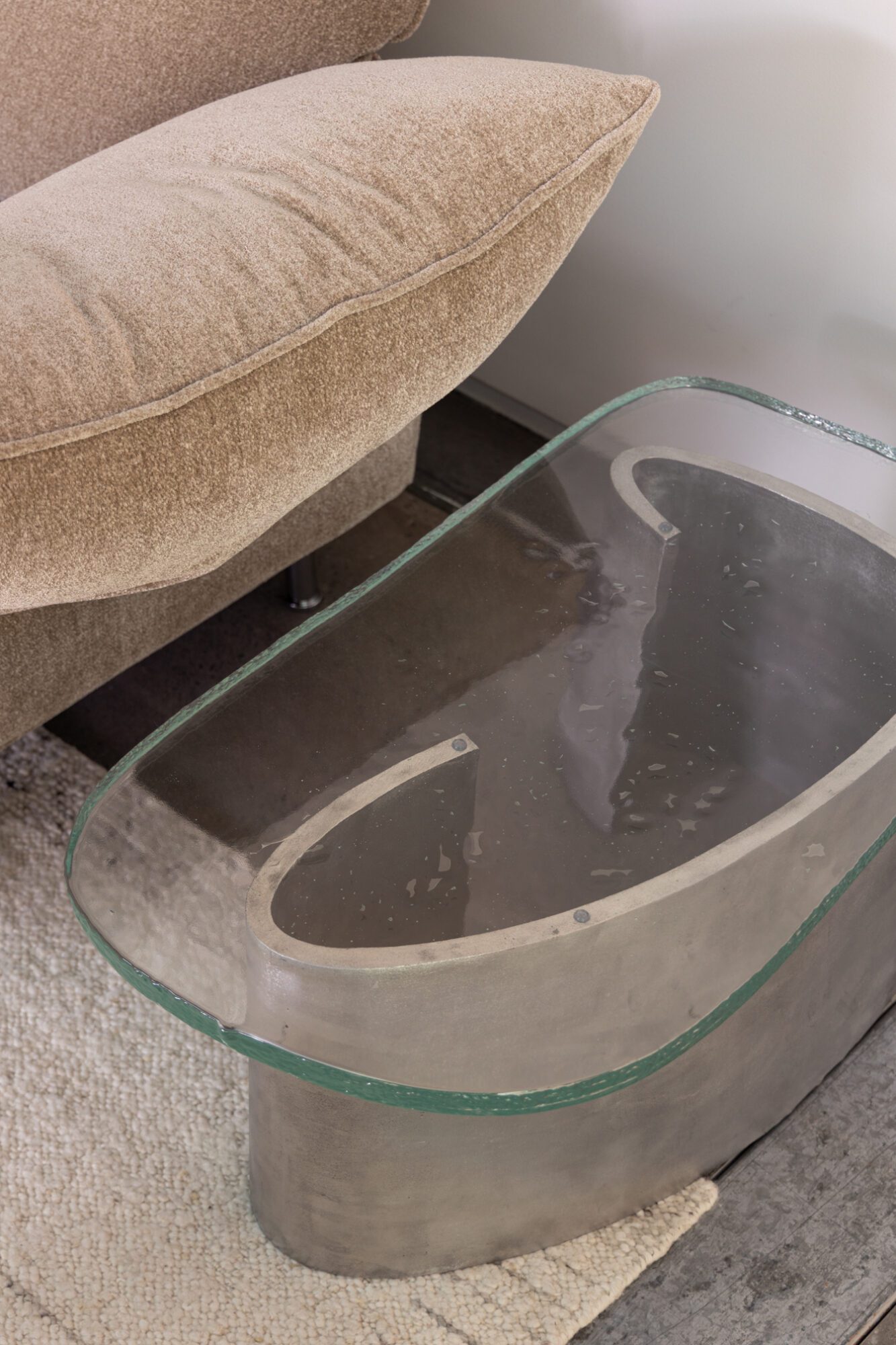
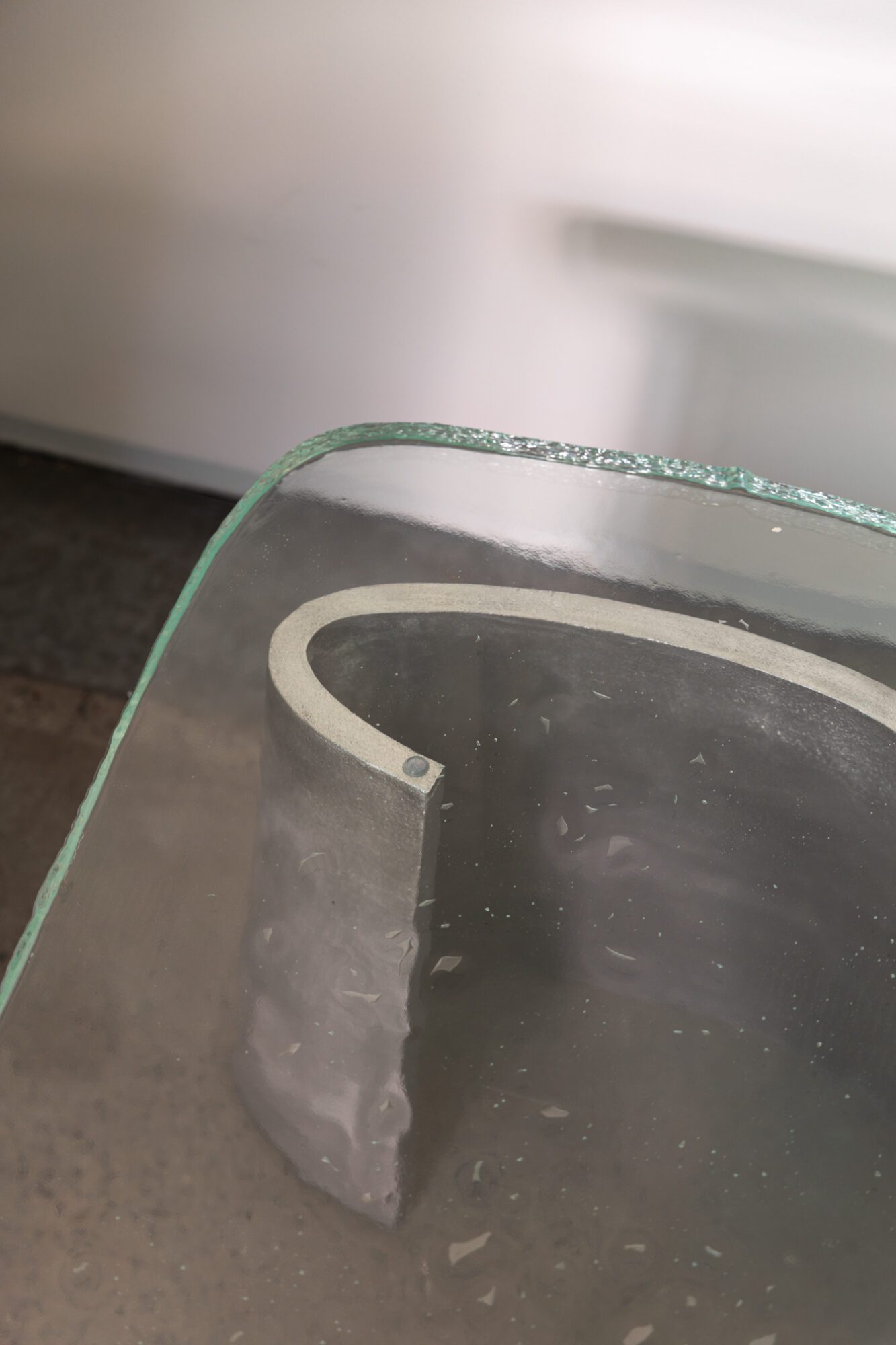
With a cast matte aluminum base and a glass top featuring a rocky finish and Flow edge, its structure emerges from a fluid geometric composition formed by two ellipses connected by a gentle curve. This gesture gives rise to a subtly inclined three-dimensional element. From there, the geometry follows the primordial form of its base, with an oval profile that harmonizes both support and the design of the top. “By interrupting the ellipses and connecting them softly, we were able to create a truly unique piece,” says Fernanda.
